
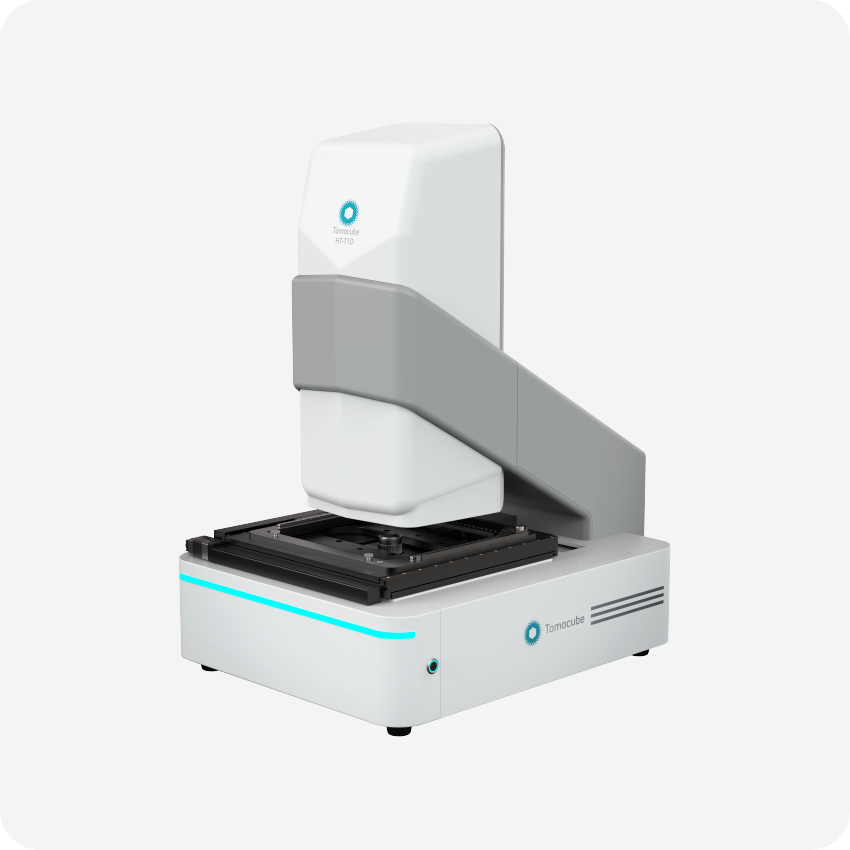
HT-T1™
HT-T1™: 3D Holotomography for Transparent Structure Metrology
- ForTransparent samples
- Lateral resolution161 nm
- RI sensitivity~10⁻⁴ Δn
Seeing Through the Invisible.
Holotomography reconstructs a sample's 3D refractive index distribution with multiple illumination beams, enabling preparation-free, non-destructive 3D analysis of internal structure. Designed for transparent materials, the HT-T1™ is a transmission-based holotomography system optimized for non-destructive inspection of glass substrates, waveguides, and other optically transparent samples.
By utilizing Tomocube’s second-generation holotomography technology, the HT-T1™ delivers high-resolution, high-SNR imaging. With a lateral resolution of 161 nanometers and an axial resolution of 1.298 micrometers (measured in glass with refractive index n = 1.5), the system delivers exceptional 3D visualization of fine structures. Its refractive-index sensitivity down to ~10⁻⁴ Δn resolves subtle material variations, making it suited to thin-film layers and microfabricated transparent components. This ensures unparalleled accuracy in industrial inspection and quality control.
Features
-

- High-Resolution 3D Imaging
- Capture fine internal structures with lateral resolution of 161 nm and axial resolution of 1.298 µm, enabling precise visualization of transparent materials.
-

- High Refractive Index Sensitivity
- Detect subtle material changes with RI sensitivity down to 10⁻⁴, allowing analysis of laser-induced modifications, thin films, and internal defects that surface-based metrology cannot access.
-

- Non-Destructive and Contact-Free Measurement
- Perform full-volume analysis without damaging or altering the sample, preserving sample integrity during inspection of glass substrates, waveguides, and microfabricated structures.
-

- Robust Industrial Application
- Optimized for industrial inspection environments, providing stable, repeatable measurements essential for process control, quality assurance, and advanced manufacturing development.
User benefits
-
Non-Destructive 3D Imaging
Beyond the surface-level information of conventional inspection tools, HT-T1™ provides true three-dimensional imaging of internal structures completely non-destructively. No cutting, polishing, or physical contact is required. This allows repeated inspection of valuable or delicate samples without the risk of damage or contamination. Manufacturers can monitor product quality at any stage of production, confidently identifying internal defects or irregularities that may affect product performance. The ability to observe the full internal structure, layer by layer, ensures greater confidence in process control and long-term product reliability.

-
Direct Laser Modification Analysis
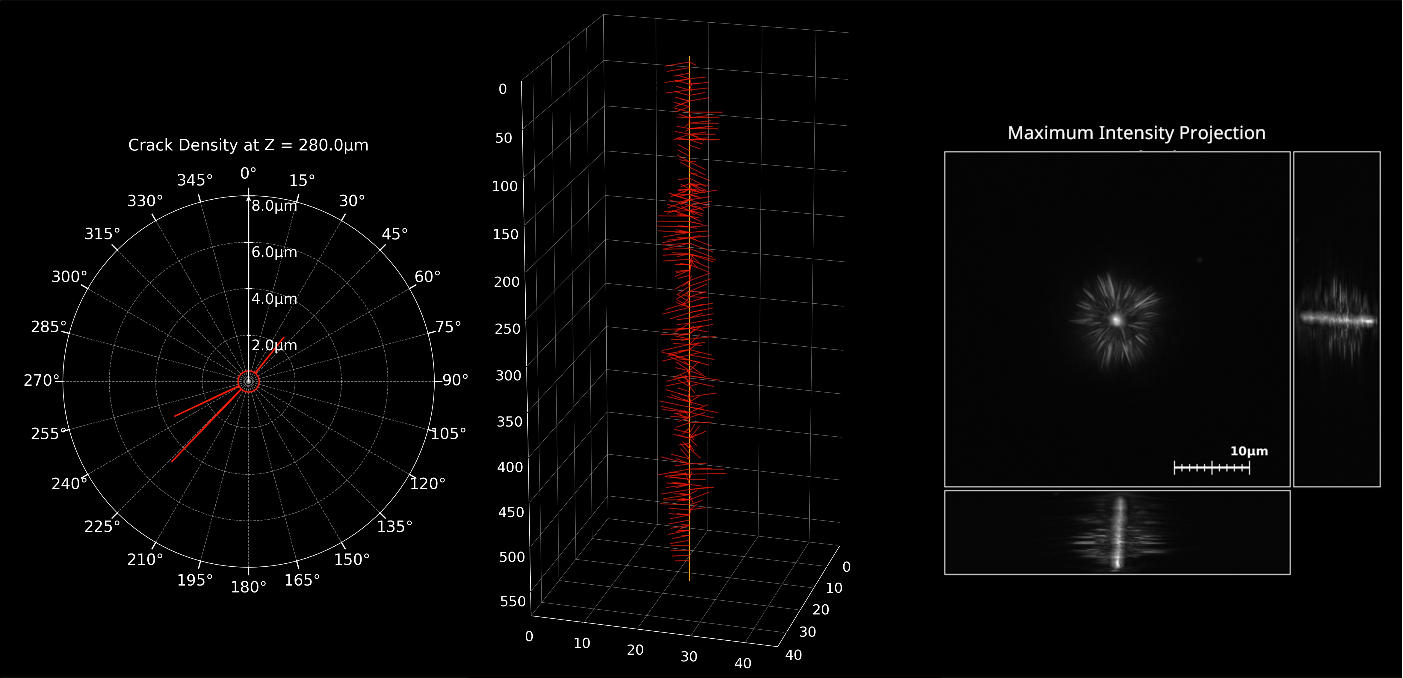
Laser processes are increasingly used to modify transparent materials by changing their internal refractive index. However, these changes are often invisible to traditional inspection methods. HT-T1™ makes these hidden modifications visible by capturing detailed 3D refractive index maps. This allows engineers to directly observe how laser energy has altered the material—whether through densification, rarefaction, formation of microdefects, or even early stage cracking. With this clear feedback, laser process parameters can be fine-tuned for optimal performance, leading to more consistent manufacturing results and reduced process variability.
-
Optimized Etching Process Control
In etching processes, controlling the exact shape, depth, and smoothness of features like vias and trenches is critical to device performance. HT-T1™ provides high-resolution 3D visualization of these structures after etching, characterizing parameters such as via taper, sidewall geometry, and etch completeness. By providing quantitative feedback not just on surface appearance but on internal geometry, the system allows engineers to adjust etching conditions with greater precision. This leads to improved uniformity across production batches, higher process yield, and more reliable downstream assembly.

-
Enhanced AOI Inspection Support
Traditional Automated Optical Inspection (AOI) tools are effective at detecting surface defects but often miss internal problems that can lead to later failures. HT-T1™ complements AOI by revealing features surface-based AOI misses—such as subsurface voids, incomplete material removal, or hidden microcracks beneath the surface. By integrating HT-T1™ into the inspection workflow, manufacturers gain a deeper understanding of their process health, catch potential failures earlier, and reduce costly rework or scrap downstream. This deeper insight ultimately supports higher product reliability and customer satisfaction.

Applications

Configuration
-
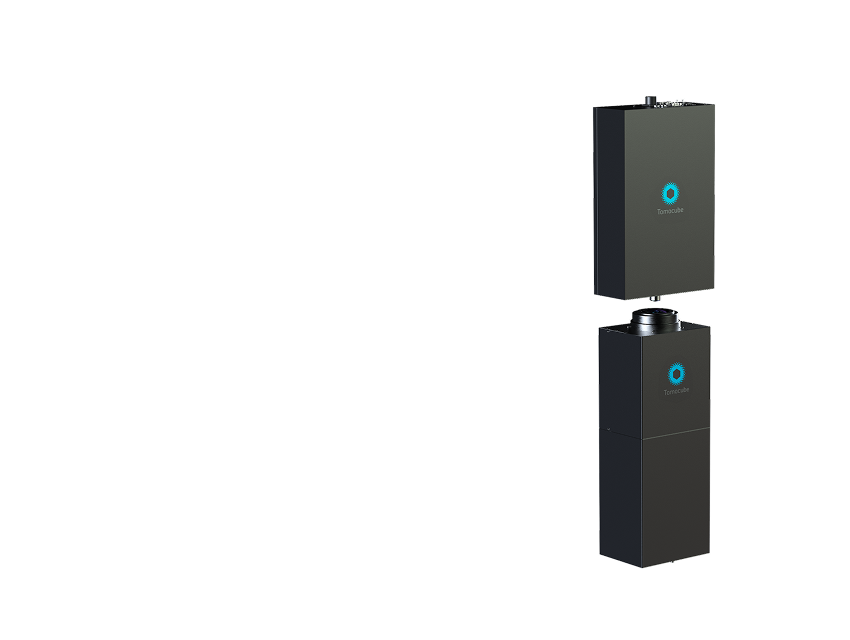
HT-T1™ Module
- HT imaging unit
- HT illumination unit
- TomoPilot interface with Host
-
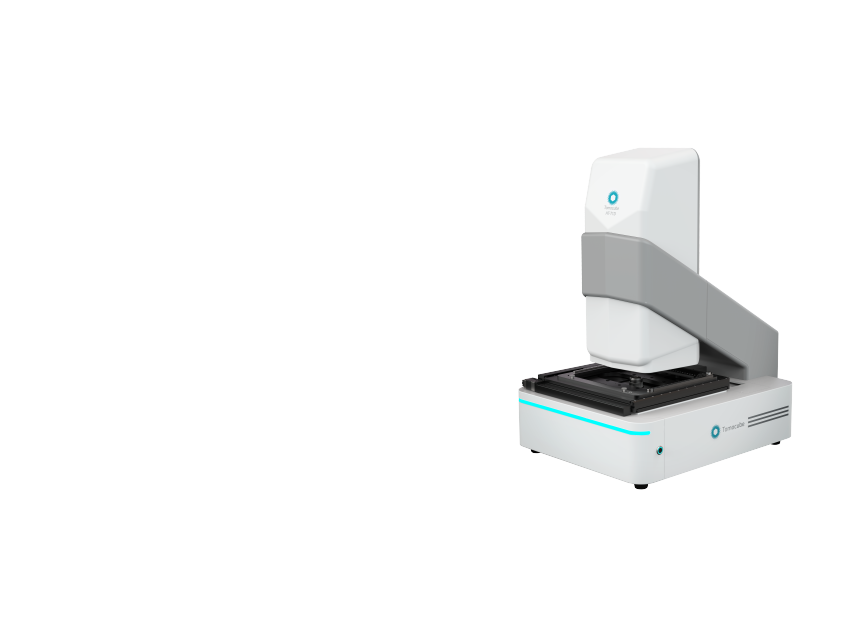
HT-T1™ Desktop
- HT imaging unit
- HT illumination unit
- Motorized Sample Stage
- TomoStudio MI - Imaging & Acquisition
- TomoAnalysis MI - Data viewing & Analysis


Specifications
| System type | Transmission-based holotomography (2nd-generation) |
|---|---|
| Lateral resolution | 161 nm |
| Axial resolution | 1.298 µm (in glass, n = 1.5) |
| Refractive-index sensitivity | ~10⁻⁴ Δn |
| Target samples | Transparent / semi-transparent materials — glass substrates (up to 2 mm), TGV panels, silicon photonics waveguides, Holographic Optical Elements (HOE), optical films |
| Measurement outputs | 3D refractive-index volume, critical dimensions, depth & taper, sidewall roughness, internal defect / microcrack locations |
| Configurations | Module (imaging unit, illumination unit, TomoPilot host interface) · Desktop (adds motorized sample stage, TomoVision acquisition, TomoAnalysis MI analysis) |
| Software | TomoVision (acquisition control) · TomoAnalysis MI (data viewing & quantitative analysis) · TomoPilot (host integration) |
| Dimensions & facility requirements | See technical datasheet — available on request |
* For the full specification sheet including dimensions, environmental and host-integration requirements, request the datasheet.
See your own sample in 3D
The fastest way to evaluate the HT-T1™ is with your sample, not ours.
Send us a sample — we measure it and review the full 3D dataset with you, free of charge.
- 01Send your sample
under NDA - 02We measure it and prepare
a full 3D analysis report - 03Review the data live
with our application engineer